Britons trapped in a cycle of unaffordable winters and intolerable summers
New research from Citizens Advice has revealed that millions of people across the UK are trapped in homes they can’t cool, with little to no control over soaring indoor temperatures. The findings come as the UK experiences its fifth heatwave of the year and suffers an ongoing drought affecting almost three quarters of England.
In a survey carried out for Citizens Advice[i], almost half (44%) of British adults, or 24.2 million people, said they lack the basic control needed to stop their homes overheating. Further, one in six adults, or almost nine million people, say that they have taken drastic action to cope with this year’s extreme heat. This includes sleeping in unconventional places such as their kitchen, garden, or balcony; taking sick days, unpaid leave or annual leave; or even paying for hotels. A further four million said they have had to use makeshift solutions including taping tin foil, cardboard, or damp sheets to windows.
Calls for a ‘cool homes plan’
The research found that poorly designed homes, which act like 'heat traps', coupled with the high cost of cooling equipment such as air conditioning, are leaving many people feeling helpless during periods of extreme heat. In response, the charity is calling for the government to act on what it claims is now a year-round crisis of soaring heat in summer and unaffordable energy bills in winter.
Dame Clare Moriarty, Chief Executive of Citizens Advice, said:
“For far too many people, a summer heatwave doesn't mean enjoying the sun, it means being trapped in a sweltering home with no control over the temperature. We’re now facing a year-round crisis, where poorly designed housing stock is acting as a giant heat trap in summer and as an ice box in winter.”[ii]
Citizens Advice is calling for government policy to explicitly address overheating through measures such as improved insulation, ventilation, shading, window design and heat network upgrades.
“The government has a vital opportunity to help fix this through the Warm Homes Plan. By investing in better insulation, ventilation, and heat network upgrades, we can ensure people's homes are warmer in the winter and safer and cooler in the summer.”[iii] Dame Moriarty says.
An area the government could target is the rental market, where half (51%) of tenants - which includes those who rent privately and those in social housing - feel they lack the basic control needed to stop their homes overheating, compared with 40% of homeowners. Citizens Advice also identified people struggling with an extreme lack of control in soaring temperatures. This ranged from renters who cannot open fixed or locked windows, to people on heat networks who cannot switch off central heating or control their thermostat.
The charity found that those living in a building with an old, gas-run heat network are among the most at risk of excess indoor heat due to hot pipework intensifying indoor temperatures. The charity estimates that 90,000 heat network consumers are unable to turn off their central heating even during summer. This could prove a key target moving forward, by upgrading these consumers onto modern heating systems.
Existing government housing policies focus primarily on energy efficiency and decarbonisation rather than overheating. The UK government published its initial Warm Homes plan back in 2024, before announcing £1.8 billion in funding for the scheme in March last year. The Warm Homes plan seeks to improve energy efficiency in residential properties, as well as introduce clean technologies such as solar panels and heat pumps. The funding will be used to retrofit up to 170,000 homes across England, improving their energy efficiency, reducing bills, and cutting emissions.
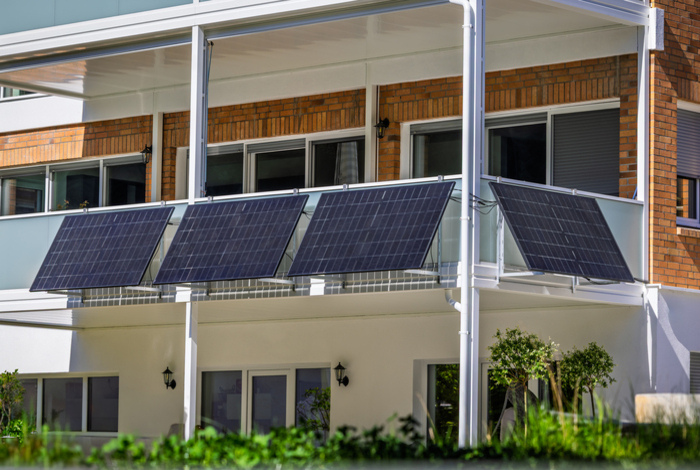
Separately, the Future Homes Standard (FHS) will come into force in 2028, a year later than originally expected[iv]. The biggest change will be the effective end of fossil fuel heating in new homes, where gas boilers will be replaced by heat pumps or heat networks, meaning low-carbon heating becomes the default for all new properties. Likewise renewable energy generation will now be mandatory on most new homes (exceptions include high-rise buildings, for example), typically delivered via the use of solar photovoltaic (PV) panels.
However, neither of these government schemes explicitly target cooling issues, instead the Warm Homes Plan recognises the UK’s responsibilities as a signatory to the Global Cooling Pledge, stating that: “We will publish the UK Cooling Outlook in 2026 to consolidate evidence, identify opportunities and future evidence needs to pursue sustainable and efficient cooling and refrigeration”[v].
Citizens Advice argues that cases such as heat-network customers being unable to switch off their heating demonstrate why overheating should be treated as a housing issue rather than merely a consequence of hotter summers.
With millions of people reporting that they lack control over indoor temperatures, the charity says the government must now develop a dedicated strategy to ensure homes remain safe, comfortable and affordable throughout the year.
References
[iii] Ibid
[iv] Department for Energy Security and Net Zero - GOV.UK
[v] Warm Homes Plan (web-optimised PDF)